


Supporting Environmental Community Groups
to Reach Their Full Potential
Restore Rodney East is all about weaving connections between environmental groups, local stakeholders, and the wider community across eastern Rodney, from Puhoi in the south to Te Arai in the north, in the upper Auckland region. By working together, we’re nurturing lasting, positive change for our local ecosystems and the people who care for them.
Why Restore Rodney East?
Since the early 2000s, there has been a growing national awareness of the impacts of invasive species and human development on our precious and unique ecosystems of Aotearoa New Zealand. Local groups and organisations across Rodney East have worked for many years to protect and enhance the natural environment and the many unique ecosystems our community values.
Currently, there are more than forty Rodney East initiatives ranging from large landscape-scale programmes with fully formed governance and funding models, right down to individuals conducting heroic solo efforts to improve those ecosystems. An identified challenge is to ensure this effort and good work can be sustained and grown, and potential gaps and overlaps within and between activities are minimised. More than ever, we must acknowledge, nurture and nourish current and historic work undertaken across Rodney East to improve environmental outcomes.
Our 2026 Annual Report shares the people, partnerships, projects and progress that have shaped the year, and the work underway to strengthen our local conservation community.
Read our 2026 Annual Report to find out more.
.png)

Behind the RRE Logo Kererū Design
Kererū
They are symbolic of guardianship. Kererū and Parea are now the only bird species big enough to swallow large fruit, of trees such as karaka, tawamiro, and taraire, dispersing the seed over huge distances. The disappearance of these iconic birds could be a widespread disaster for the regeneration of our native forests.
Fish - Kokopu / Inanga or Eel
Represent healthy rivers and streams, freshwater management and biodiversity.These species rely on streamside cover to provide cool, sheltered habitat. Water temperature and clarity, dissolved oxygen, toxic substances and nutrients all have an effect on the feeding, spawning and health of fish.
Koru
The Koru is a symbol of new life, regeneration, growth and harmony. The shape is commonly associated with the unfurling of a fern frond. The Koru is reflective of the earth’s elements, sun, water, and soil of which all life depends.
Mountains & Rivers
Representing the land, trees, rivers and native species that depend on our native flora and fauna. It is a taonga (treasure) that does much to define us both locally and as a nation. This provides habitat for all of our native species.
Land / Sea / Hand
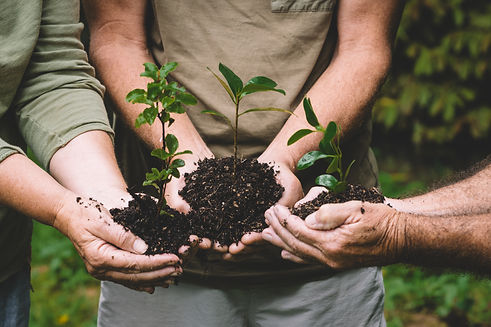
The hand holds and supports everything, representing the collaboration of RRE, working together with community groups, who are passionate about the environment. Papatūānuku (Earth Mother), is land which emerged from the sea giving life to all things. Seabirds, shellfish, fish and other animals depend on the health of the land, for the health of the sea.
Meet The Team
Dedication Expertise Passion Collaboration Impact

Facilitator
Sarah Churchouse
Sarah lives in Puhoi with her partner on a large bush block, which they are actively enhancing through native planting and ongoing ecological restoration. She is the treasurer of the Puhoi Hall Society Inc and a member of Puhoi Vision & Action.
With a strong interest in community organisations and event planning, Sarah is passionate about supporting local groups, particularly through grant funding and funding development. She enjoys working with groups to turn ideas into practical outcomes, with a focus on problem solving, generating workable solutions, and achieving positive results for the community.
She has a professional background in early childhood education, animal management, and business ownership. Sarah has long enjoyed the outdoors, including farming, fishing, dogs, horses, and hands-on practical work supporting others.
She is deeply committed to strengthening environmental groups and contributing to the protection and restoration of Aotearoa’s native wildlife and natural environment.

Chair
Tim Armitage
Tim’s background is in independent consulting, strategic planning and IT programme management. He has a lifetime association with Matakana (Takatu born and raised) and with Rodney. Involvement in environmental challenges goes back to 1970s when he spent a year on Campbell Island and thereafter have spent many years on a variety of restoration projects here, in the Bay of Islands and elsewhere. He has witnessed enormous improvement on addressing eco-system degradation over the past years and the potential for even greater gains through increased collaboration between initiatives and groups.

Secretary
Fran Ashton
Fran has lived in Mahurangi West with her husband for nine years since returning to New Zealand from a 13-year sailing trip. Fran is also the coordinator of the Mahurangi West Community Response Group and enjoys volunteering at the Warkworth Information Centre and Harbour Hospice.
Fran’s interests include tramping, gardening and spending time with her children and grandchildren.

Treasurer
Tim Jack
Tim Jack is a member of Friends of Awa Matakanakana (FOAM) and his talent for numbers is a boon for FOAM and Restore Rodney East. His London-based career in finance and financial technology may mean he is slightly over-qualified.
Tim grew up overlooking the Rangitikei River and after many years overseas, he returned to New Zealand. In 2015, he moved to Matakana and took on the family business - Herd Partners, a dairy livestock leasing business.
He has always been interested in conservationand he enjoys helping improve the health of our local waterways and working with like-minded organisations in the area.

Committee Member
Alex Flavell-Johnson
Rounding off the northern end of Restore Rodney East’s rohe, Mangawhai local, Alex is an ecologist who is dedicated to protecting and restoring Aotearoa’s indigenous biodiversity and ecosystems.
Alex is the Conservation Manager for Tara Iti Golf Club, and project coordinator for the Shorebirds Trust, leading a range of initiatives including landscape scale community predator control and threatened species monitoring.

Committee Member
Martin Evans
Martin is a semi-retired civil and environmental engineer with 40 + year’s experience in major water and wastewater civil engineering and environmental improvement works, mainly in New Zealand.
Currently, Martin is representing Friends of Awa Matakanakana (FOAM), Algies Bay Residents and Ratepayers Association (ABRRA) and Matakana Community Group (MCG) on the RRE steering group.
Martin is interested in the overall total catchment approach to environmental restoration works including a reduction in sediment entering Kawau Bay as well as water quality improvement and control of pest species.

Committee Member
Greg Doherty
Greg has been a resident of Sandspit since 2014 and is a past chairman of the Sandspit Residents and Ratepayers Association (SRRA). A native of Canada, Greg and his family sailed to New Zealand in a 38 ft yacht arriving in 1983.
Greg is dedicated to enhancing and preserving the amenities of our beautiful country. Greg has been helping with the formation of Restore Rodney East to enable long term solutions to pest and predator control in the region.
Greg’s focus on the SRRA has been to achieve actual solutions to issues affecting the community, not just talk about them.

Committee Member
Sophie Tweddle
Sophie is a freshwater and restoration ecologist, with 25 years' experience working in conservation. Originally from England, Sophie started her conservation career as a protected species officer for the Dorset Wildlife Trust.
Since moving to New Zealand in 2008, Sophie has worked for local government, and the charitable organization, The Mountains to Sea Conservation Trust. Here she honed her skills as a freshwater ecologist and science communicator. More recently, Sophie has worked on the Mahurangi Land Restoration Programme as the Planting Coordinator, helping landowners and community groups plan and implement native planting projects.
Sophie has a passion for helping others learn about and care for the natural environment. She believes in the strength of partnership and knowledge sharing to achieve positive, environmental, and social change, and feels privileged to sit on the committee for RRE.

Committee Member
Henry Chellew
Henry is a retired lawyer based in Snells Beach with a long-standing passion for environmental conservation. He is an active member of Pest Free Snells, where he spends time trapping pest species and mentoring backyard trappers to get their own projects up and running. Before retiring, Henry served for 18 years as an adviser to a national environmental charity, bringing strategic insight and practical experience to conservation initiatives. A keen fisher and advocate for community collaboration, Henry believes that together, we can achieve far more for the natural environment than we ever could alone.

Committee Member
Brian Fehsenfeld
Brian has been connected to the Snells Beach community for over 20 years as a property owner and ratepayer, becoming a full-time resident seven years ago after rebuilding what was once the family bach into their forever home.
After retiring in August 2024, Brian brings with him more than three decades of business leadership and governance experience, having successfully run an IT software company for 34 years and serving as a Director of both the New Zealand and Australian businesses for 22 years. He continues to contribute as a non-executive director for both companies, offering extensive expertise in governance, strategic planning, and business operations.
Brian joined the Snells Beach Residents Association in November 2024 as Treasurer and played an active role, alongside the Secretary, in updating the organisation’s Constitution in early 2025.
Outside of his professional background, Brian is a keen gardener who enjoys being involved in community activities and supporting local initiatives. His approach is grounded in a simple philosophy — “It’s not what the community can do for me, but what I can do for the community.”