A living legacy - Mahurangi Matters
- Apr 15
- 3 min read

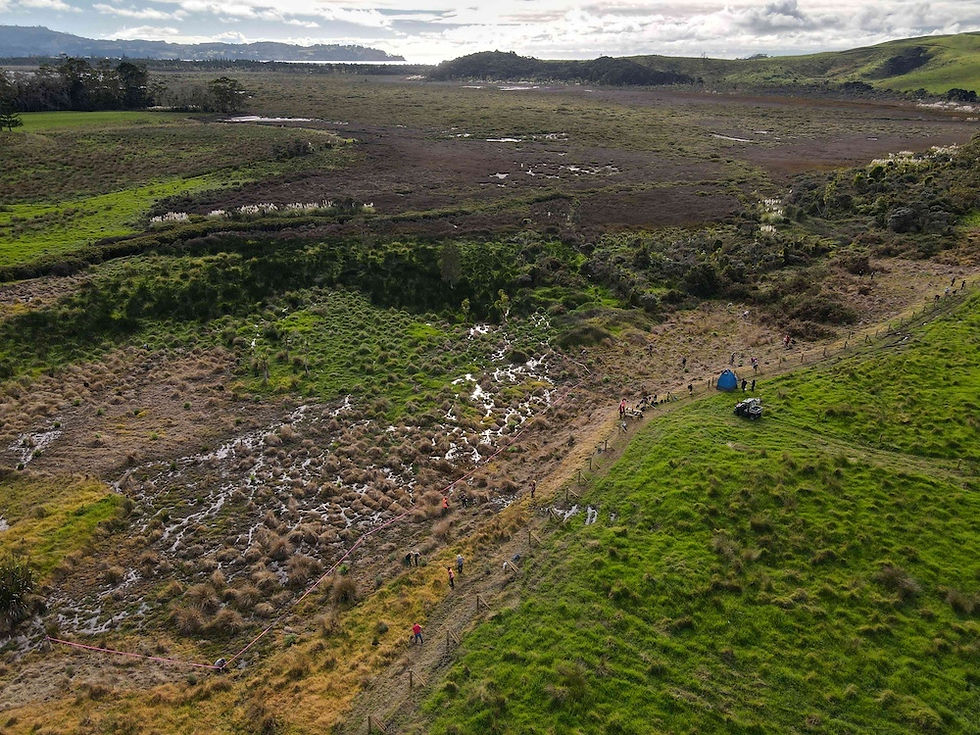
Across Rodney East, more than 45 community groups are quietly doing the work that sustains our natural world – restoring native bush, protecting waterways and bringing wildlife back to landscapes that once thrived.
It is work built on local knowledge, persistence and thousands of volunteer hours. But behind that effort, a more urgent question is emerging – are you and I waiting too long to invest in the future we say we care about?
At a recent Connect and Inspire event in Matakana, education futurist Frances Valintine pointed to a striking reality. New Zealand is on the cusp of the largest intergenerational wealth transfer in its history – an estimated $1.6 trillion is expected to pass from one generation to the next in coming decades.
At the same time, we face a biodiversity and climate crisis that is accelerating now. Those two forces are on a collision course because while wealth is growing, it is often locked in place. Many younger New Zealanders won’t receive inheritances until their late 50s, 60s, or beyond. By then, the environmental challenges we face today such as degraded waterways, declining native species and disappearing habitats, will be far more severe and, in some cases, far harder or more expensive to reverse, if that is still possible at all.
In other words, the resources exist. But the timing is off.
Traditionally, legacy has been something we leave behind, but increasingly, that idea is being challenged. What if legacy was not something deferred, but something lived? What if giving happened not at the end of life, but during it, when people can still shape outcomes, see results and ensure their values are reflected? What if we gave part of our estate to fund a local restoration project while we’re still alive, or donated part of our pension each month if we’re in a position to do so?
In environmental restoration, timing is everything.
A wetland restored today begins improving water quality almost immediately.
Predator control undertaken now prevents irreversible ecosystem damage. Native trees planted this year will be forests within a generation – not a century.
Delay, on the other hand, compounds loss.
There is also a deeply human dimension to giving during one’s lifetime. Supporting a local reserve, coastline or catchment is not abstract. It is tangible. It can be walked, visited and experienced. It becomes part of a family’s story, not just their estate.
And it brings clarity. Lifetime giving ensures that decisions reflect personal values, rather than being left to chance, legal interpretation or shifting priorities after the fact.
Across Rodney East, this shift is already underway.
Quietly, individuals and families are choosing to invest now – backing long-term restoration projects, strengthening community groups and accelerating work that might otherwise take decades. These contributions rarely make headlines, but their effects are visible on the ground.
Bush regenerates faster. Predator numbers drop sooner. Biodiversity begins to return.
At the same time, public funding for environmental programmes has tightened, placing greater reliance on community effort and private support. The gap between what needs to be done and what is publicly funded continues to widen.
Which brings us back to that central tension: a nation growing wealthier on paper, while the natural systems that sustain it face increasing pressure.
If the coming decades are defined by both unprecedented wealth transfer and environmental urgency, then when we give may matter just as much as how much we give.
For Rodney East, the difference between acting now and waiting for inheritance may not just be financial. It may be ecological – measured in cleaner rivers, healthier forests and the return of species that might otherwise be lost.
Legacy, it turns out, is not just about what we leave behind. It is about what we choose to bring forward.
By Tim Armitage
Chair, Restore Rodney East