Conservation starts young
- Jul 3
- 2 min read

Sarah Churchouse, Facilitator Restore Rodney East
Conservation is often spoken about as something for the future, but the truth is, it is already being shaped by our young people right now. As Sir David
Attenborough, who last month turned 100years old, reminds us, “If children grow upnot knowing about nature and appreciating it, they will not understand it, and if they don’t understand it, they won’t protect it.”
Our tamariki and rangatahi are not just the next generation of kaitiaki, they are
already stepping into that role with energy,curiosity and commitment.
At Restore Rodney East (RRE), we are continually inspired by the way
young people engage when given the opportunity. From school groups
taking part in community planting days to those completing their Duke
of Edinburgh Hillary Award through conservation service, we see first-hand how
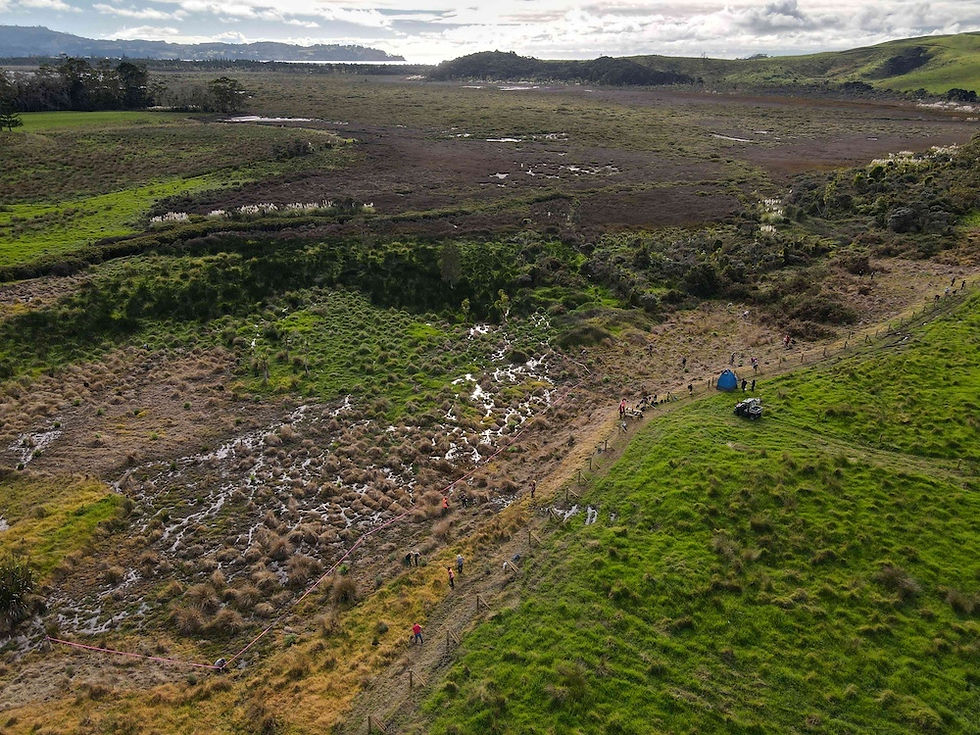
environmental action builds confidence, leadership and connection to place. And,
importantly, it often becomes something families do together, with mums, dads,
caregivers and siblings joining in.
Recently, we took part in the Sustainability Challenge at Wenderholm Regional Park, run by Auckland Council’s Sustainable Schools programme. Our Restore Rodney East challenge invited students to answer questions about native species, with the answers hidden in plain sight on the muraldisplayed on our trailer.
One question asked: Which is NewZealand’s rarest native bird?
Most school teams confidently answered “kiwi”. It is a species deeply embedded in our national identity, and rightly so. But one school stood out, Mangawhai School– who identified the correct answer – the tara iti/New Zealand fairy tern, well known locally in the Mangawhai area because this is one of only four sites where tara iti breed. With only around 50 birds (11 breeding pairs) thought to remain globally, it is one of Aotearoa’s most threatened seabirds.
Moments like this are powerful. They remind us that knowledge, place-based learning and local awareness matter. When young people are given the chance to learn in context, on the land and in their own communities, conservation becomes real, not abstract.
This is what gives us hope. Not just projects or programmes, but people – young people – asking questions, noticing what is around them and choosing to care. And the best part? You don’t need to be an expert to be part of it. You just need to start. Whether you are a student, a parent or simply someone who loves where you live, there is a place for you in restoring our local ecosystems. Public planting days are a great way to get involved and connect with the community around you, even for just one day.
The future of conservation is not waiting. It is already here, in our schools and in our community. Families play a vital role in this journey. By getting involved together, we help build stronger communities, lifelong connections to nature and future kaitiaki for our environment.
Visit www.rre.org.nz to discover local groups, family-friendly events, planting days and opportunities for your children to get involved in conservation close
to home.